Introduction
What is SEO? Many business owners ask this question. Moreover, many beginners hear this term often. However, they may not understand its importance.
SEO stands for Search Engine Optimization. Simply put, SEO helps websites rank higher on Google. As a result, businesses gain more visibility online.
Today, customers search online before buying products. Therefore, businesses need a strong online presence. Without visibility, potential customers may never find them.
Moreover, SEO helps businesses attract targeted visitors. These visitors already search for relevant products. Consequently, SEO often generates better results.
Understanding SEO is now more important than ever. Therefore, every business should learn its basics.
What Is SEO?
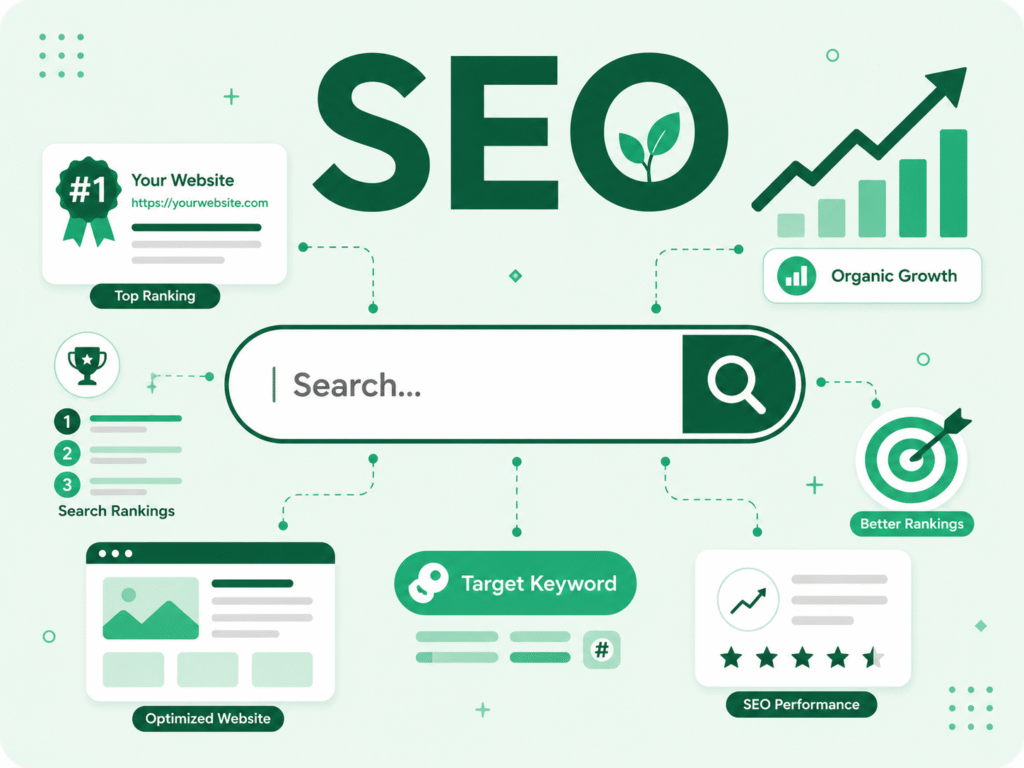
SEO stands for Search Engine Optimization. It improves a website’s visibility on search engines.
When users search on Google, they see results. SEO helps websites appear within those results.
For example, someone may search for “digital marketing course.” Google then shows relevant websites.
However, Google does not choose websites randomly. Instead, it evaluates many ranking factors.
These factors include:
- Content quality
- Website speed
- User experience
- Backlinks
- Keyword relevance
Therefore, businesses use SEO to improve rankings naturally.
Moreover, SEO helps attract organic traffic. Organic traffic means visitors arrive without paid ads.
As a result, businesses can grow consistently over time.
How Search Engines Work
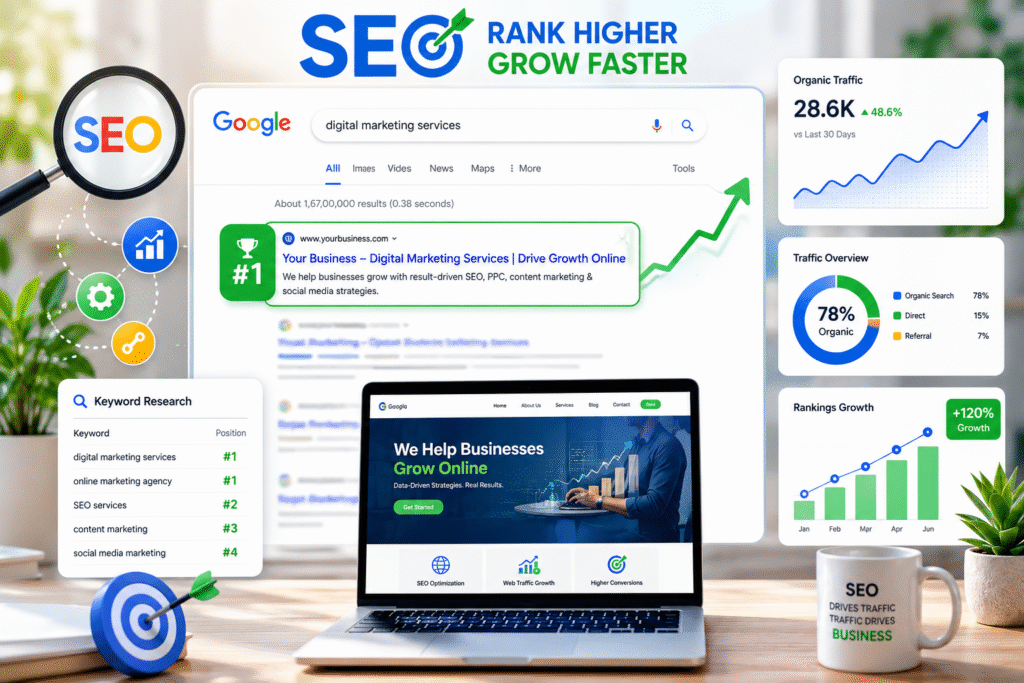
Search engines constantly scan websites online. This process helps them understand content.
Firstly, search engines discover web pages. Next, they store information in massive databases.
After that, algorithms analyze pages carefully. They compare pages against user searches.
Google tries to deliver the best answers. Therefore, quality content receives better visibility.
Search engines consider several factors:
- Relevance
- Authority
- User experience
- Page speed
- Mobile usability
Consequently, optimized websites perform better in search results.
Why SEO Matters for Businesses
Businesses need customers to grow. However, customers must find businesses first.
Today, most buying journeys begin online. Therefore, online visibility matters greatly.
SEO helps businesses appear before potential customers. As a result, they receive more opportunities.
Moreover, Search engine optimization creates long-term value. Unlike paid ads, traffic continues over time.
Businesses also gain credibility through higher rankings. Users often trust top-ranking websites.
Furthermore, Search engine optimization improves brand awareness. People repeatedly see visible businesses online.
Consequently, businesses build stronger customer relationships.
Benefits of SEO for Businesses
Search engine optimization offers several important benefits. Therefore, many companies invest heavily in it.
Increased Website Traffic
Higher rankings attract more visitors. Moreover, organic traffic often converts better.
People searching specific terms already show interest. Therefore, these visitors become valuable prospects.
Better Brand Visibility
Customers trust familiar brands more. Consequently, repeated visibility improves recognition.
Search engine optimization helps businesses appear frequently. Therefore, customers remember those brands.
Cost-Effective Marketing
Paid advertising requires ongoing spending. However, Search engine optimization generates lasting traffic.
Although Search engine optimization requires effort, results compound over time. Consequently, businesses achieve better returns.
Improved User Experience
Search engine optimization focuses on website quality. Therefore, visitors enjoy better experiences.
Fast websites improve satisfaction significantly. Moreover, mobile-friendly sites perform better.
What Are Keywords in SEO?
Keywords are words users type into Google. Therefore, keywords guide Search engine optimization strategies.
For example:
- Digital marketing course
- SEO services
- Content marketing
Businesses target relevant keywords carefully. Moreover, they use keywords naturally.
Keyword stuffing harms user experience. Therefore, businesses should avoid it completely.
Instead, focus on helpful content. Consequently, rankings improve more naturally.
Types of SEO
Search engine optimization includes several important categories. Each category serves a specific purpose.
On-Page SEO
On-page SEO focuses on website content.
Important elements include:
- Titles
- Headings
- Meta descriptions
- Keywords
- Internal links
Moreover, content quality remains extremely important.
Off-Page SEO
Off-page SEO happens outside websites.
Backlinks play a major role here. These links come from external websites.
Quality backlinks improve authority significantly. Therefore, businesses seek trustworthy references.
Technical SEO
Technical SEO improves website performance.
It includes:
- Website speed
- Mobile optimization
- Secure connections
- Crawlability
Moreover, technical improvements enhance user experience.
Local SEO
Local SEO targets nearby customers.
Businesses optimize:
- Google Business Profile
- Local keywords
- Customer reviews
Consequently, local customers find businesses more easily.
The Role of Content in SEO
Content drives successful SEO campaigns. Without content, search engine optimization becomes difficult.
Google prefers helpful and informative pages. Therefore, businesses should create valuable content.
Examples include:
- Blog articles
- Guides
- Tutorials
- FAQs
Moreover, content answers user questions directly.
Quality content also increases engagement. Consequently, visitors stay longer on websites.
Furthermore, strong content earns backlinks naturally. Therefore, authority improves over time.
Why User Experience Affects SEO
User experience influences rankings significantly.
Visitors expect websites to load quickly. Therefore, slow websites lose traffic.
Additionally, users prefer easy navigation.
Businesses should focus on:
- Fast loading speeds
- Mobile responsiveness
- Clear navigation
- Readable content
As a result, visitors enjoy better experiences.
Google rewards websites with positive user signals. Consequently, rankings often improve.
How SEO Helps Small Businesses
Small businesses often face strong competition.
However, Search engine optimization creates opportunities for growth.
Local Search engine optimization helps small businesses attract nearby customers. Therefore, visibility improves significantly.
Moreover, Search engine optimization reduces reliance on expensive advertising.
Small businesses can:
- Build credibility
- Increase traffic
- Generate leads
- Improve sales
Consequently, Search engine optimization becomes a valuable growth strategy.
Common SEO Mistakes to Avoid
Many businesses make avoidable SEO mistakes.
Ignoring Keyword Research
Without research, content lacks direction.
Therefore, businesses should understand search intent first.
Creating Low-Quality Content
Thin content rarely performs well.
Instead, businesses should provide valuable information.
Keyword Stuffing
Overusing keywords harms readability.
Moreover, search engines may penalize such practices.
Ignoring Mobile Users
Most users browse through smartphones.
Therefore, mobile optimization remains essential.
Neglecting Technical SEO
Technical problems affect rankings significantly.
Consequently, businesses should monitor performance regularly.
SEO vs Paid Advertising
Businesses often compare search engine optimization and paid advertising.
Both methods generate traffic. However, they work differently.
Paid ads provide immediate visibility. However, traffic stops when spending ends.
search engine optimization takes longer initially. Nevertheless, results often last longer.
Moreover, search engine optimization builds authority naturally.
Therefore, many businesses combine both strategies.
Together, they create stronger marketing performance.
The Future of SEO
Search engine optimization continues evolving rapidly.
Artificial intelligence influences search behavior increasingly. Therefore, businesses must adapt continuously.
Voice search also grows steadily.
Moreover, search engines prioritize user experience more than ever.
Future search engine optimization will focus heavily on:
- Helpful content
- User intent
- Website performance
- Trustworthiness
Consequently, businesses should prioritize value creation.
Why Every Business Needs SEO
Modern consumers depend on search engines daily.
They search for:
- Products
- Services
- Information
- Reviews
Therefore, businesses need visibility where customers search.
Search engine optimization helps achieve that visibility.
Moreover, Search engine optimization supports long-term growth.
It improves:
- Traffic
- Brand awareness
- Leads
- Sales
Consequently, businesses gain a competitive advantage.
Conclusion
So, Search engine optimization is the process of improving website visibility on search engines.
Moreover, Search engine optimization helps businesses attract qualified visitors naturally. As a result, companies generate more traffic, leads, and sales.
Search engine optimization also improves user experience and brand credibility. Therefore, it remains one of the most valuable digital marketing strategies.
Whether you run a startup or established company, Search engine optimization offers long-term benefits. Consequently, investing in Search engine optimization can support sustainable business growth.
As search behavior continues evolving, businesses that prioritize Search engine optimization will remain visible, competitive, and successful online.

Leave a Reply