Author: Ritesh Kumar

  • What Is SEO and Why Is It Important for Businesses?

    Introduction

    What is SEO? Many business owners ask this question. Moreover, many beginners hear this term often. However, they may not understand its importance.

    SEO stands for Search Engine Optimization. Simply put, SEO helps websites rank higher on Google. As a result, businesses gain more visibility online.

    Today, customers search online before buying products. Therefore, businesses need a strong online presence. Without visibility, potential customers may never find them.

    Moreover, SEO helps businesses attract targeted visitors. These visitors already search for relevant products. Consequently, SEO often generates better results.

    Understanding SEO is now more important than ever. Therefore, every business should learn its basics.

    What Is SEO?
    seo

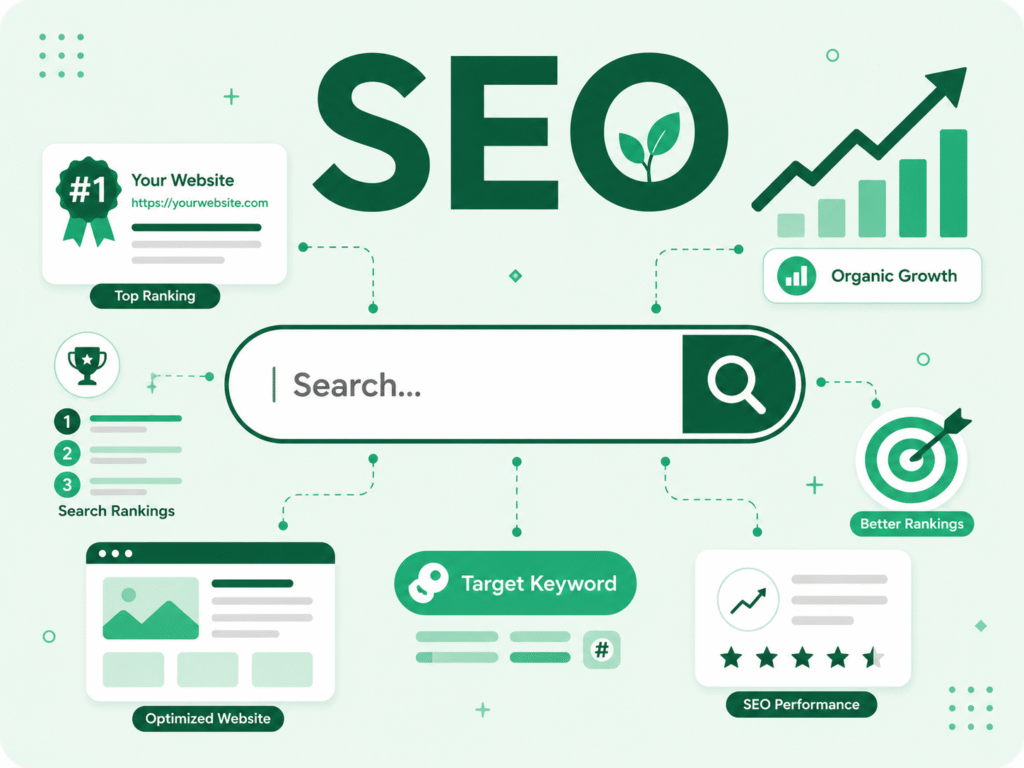
    SEO stands for Search Engine Optimization. It improves a website’s visibility on search engines.

    When users search on Google, they see results. SEO helps websites appear within those results.

    For example, someone may search for “digital marketing course.” Google then shows relevant websites.

    However, Google does not choose websites randomly. Instead, it evaluates many ranking factors.

    These factors include:

    • Content quality
    • Website speed
    • User experience
    • Backlinks
    • Keyword relevance

    Therefore, businesses use SEO to improve rankings naturally.

    Moreover, SEO helps attract organic traffic. Organic traffic means visitors arrive without paid ads.

    As a result, businesses can grow consistently over time.

    How Search Engines Work
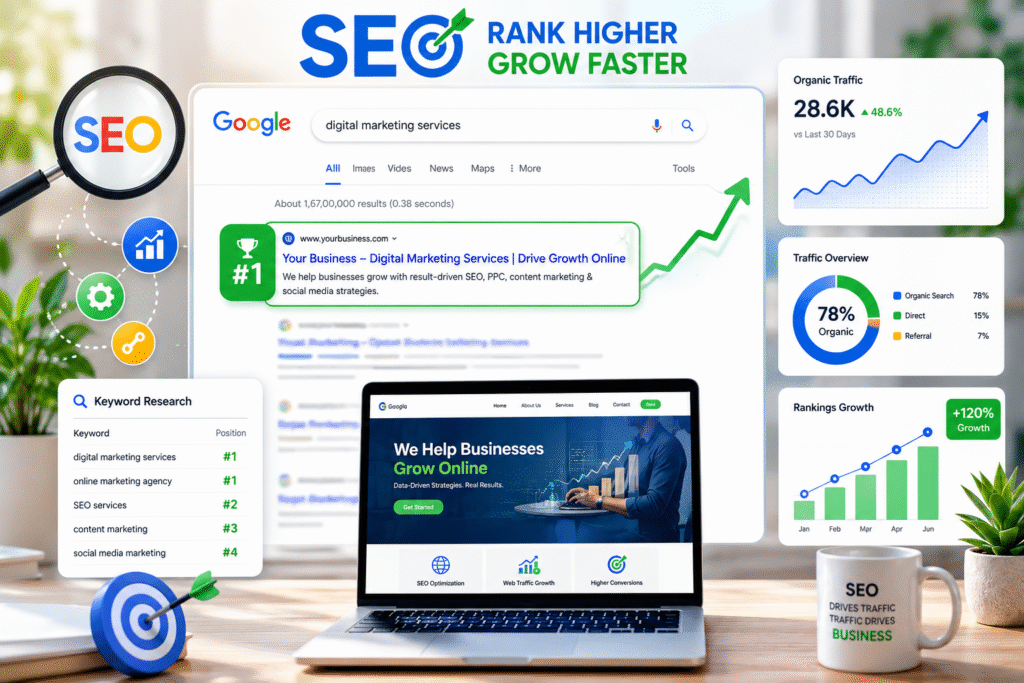
    Search engines constantly scan websites online. This process helps them understand content.

    Firstly, search engines discover web pages. Next, they store information in massive databases.

    After that, algorithms analyze pages carefully. They compare pages against user searches.

    Google tries to deliver the best answers. Therefore, quality content receives better visibility.

    Search engines consider several factors:

    • Relevance
    • Authority
    • User experience
    • Page speed
    • Mobile usability

    Consequently, optimized websites perform better in search results.

    Why SEO Matters for Businesses

    Businesses need customers to grow. However, customers must find businesses first.

    Today, most buying journeys begin online. Therefore, online visibility matters greatly.

    SEO helps businesses appear before potential customers. As a result, they receive more opportunities.

    Moreover, Search engine optimization creates long-term value. Unlike paid ads, traffic continues over time.

    Businesses also gain credibility through higher rankings. Users often trust top-ranking websites.

    Furthermore, Search engine optimization improves brand awareness. People repeatedly see visible businesses online.

    Consequently, businesses build stronger customer relationships.

    Benefits of SEO for Businesses

    Search engine optimization offers several important benefits. Therefore, many companies invest heavily in it.

    Increased Website Traffic

    Higher rankings attract more visitors. Moreover, organic traffic often converts better.

    People searching specific terms already show interest. Therefore, these visitors become valuable prospects.

    Better Brand Visibility

    Customers trust familiar brands more. Consequently, repeated visibility improves recognition.

    Search engine optimization helps businesses appear frequently. Therefore, customers remember those brands.

    Cost-Effective Marketing

    Paid advertising requires ongoing spending. However, Search engine optimization generates lasting traffic.

    Although Search engine optimization requires effort, results compound over time. Consequently, businesses achieve better returns.

    Improved User Experience

    Search engine optimization focuses on website quality. Therefore, visitors enjoy better experiences.

    Fast websites improve satisfaction significantly. Moreover, mobile-friendly sites perform better.

    What Are Keywords in SEO?

    Keywords are words users type into Google. Therefore, keywords guide Search engine optimization strategies.

    For example:

    Businesses target relevant keywords carefully. Moreover, they use keywords naturally.

    Keyword stuffing harms user experience. Therefore, businesses should avoid it completely.

    Instead, focus on helpful content. Consequently, rankings improve more naturally.

    Types of SEO

    Search engine optimization includes several important categories. Each category serves a specific purpose.

    On-Page SEO

    On-page SEO focuses on website content.

    Important elements include:

    • Titles
    • Headings
    • Meta descriptions
    • Keywords
    • Internal links

    Moreover, content quality remains extremely important.

    Off-Page SEO

    Off-page SEO happens outside websites.

    Backlinks play a major role here. These links come from external websites.

    Quality backlinks improve authority significantly. Therefore, businesses seek trustworthy references.

    Technical SEO

    Technical SEO improves website performance.

    It includes:

    • Website speed
    • Mobile optimization
    • Secure connections
    • Crawlability

    Moreover, technical improvements enhance user experience.

    Local SEO

    Local SEO targets nearby customers.

    Businesses optimize:

    • Google Business Profile
    • Local keywords
    • Customer reviews

    Consequently, local customers find businesses more easily.

    The Role of Content in SEO

    Content drives successful SEO campaigns. Without content, search engine optimization becomes difficult.

    Google prefers helpful and informative pages. Therefore, businesses should create valuable content.

    Examples include:

    • Blog articles
    • Guides
    • Tutorials
    • FAQs

    Moreover, content answers user questions directly.

    Quality content also increases engagement. Consequently, visitors stay longer on websites.

    Furthermore, strong content earns backlinks naturally. Therefore, authority improves over time.

    Why User Experience Affects SEO

    User experience influences rankings significantly.

    Visitors expect websites to load quickly. Therefore, slow websites lose traffic.

    Additionally, users prefer easy navigation.

    Businesses should focus on:

    • Fast loading speeds
    • Mobile responsiveness
    • Clear navigation
    • Readable content

    As a result, visitors enjoy better experiences.

    Google rewards websites with positive user signals. Consequently, rankings often improve.

    How SEO Helps Small Businesses

    Small businesses often face strong competition.

    However, Search engine optimization creates opportunities for growth.

    Local Search engine optimization helps small businesses attract nearby customers. Therefore, visibility improves significantly.

    Moreover, Search engine optimization reduces reliance on expensive advertising.

    Small businesses can:

    • Build credibility
    • Increase traffic
    • Generate leads
    • Improve sales

    Consequently, Search engine optimization becomes a valuable growth strategy.

    Common SEO Mistakes to Avoid

    Many businesses make avoidable SEO mistakes.

    Ignoring Keyword Research

    Without research, content lacks direction.

    Therefore, businesses should understand search intent first.

    Creating Low-Quality Content

    Thin content rarely performs well.

    Instead, businesses should provide valuable information.

    Keyword Stuffing

    Overusing keywords harms readability.

    Moreover, search engines may penalize such practices.

    Ignoring Mobile Users

    Most users browse through smartphones.

    Therefore, mobile optimization remains essential.

    Neglecting Technical SEO

    Technical problems affect rankings significantly.

    Consequently, businesses should monitor performance regularly.

    SEO vs Paid Advertising

    Businesses often compare search engine optimization and paid advertising.

    Both methods generate traffic. However, they work differently.

    Paid ads provide immediate visibility. However, traffic stops when spending ends.

    search engine optimization takes longer initially. Nevertheless, results often last longer.

    Moreover, search engine optimization builds authority naturally.

    Therefore, many businesses combine both strategies.

    Together, they create stronger marketing performance.

    The Future of SEO

    Search engine optimization continues evolving rapidly.

    Artificial intelligence influences search behavior increasingly. Therefore, businesses must adapt continuously.

    Voice search also grows steadily.

    Moreover, search engines prioritize user experience more than ever.

    Future search engine optimization will focus heavily on:

    • Helpful content
    • User intent
    • Website performance
    • Trustworthiness

    Consequently, businesses should prioritize value creation.

    Why Every Business Needs SEO

    Modern consumers depend on search engines daily.

    They search for:

    • Products
    • Services
    • Information
    • Reviews

    Therefore, businesses need visibility where customers search.

    Search engine optimization helps achieve that visibility.

    Moreover, Search engine optimization supports long-term growth.

    It improves:

    • Traffic
    • Brand awareness
    • Leads
    • Sales

    Consequently, businesses gain a competitive advantage.

    Conclusion

    So,  Search engine optimization is the process of improving website visibility on search engines.

    Moreover, Search engine optimization helps businesses attract qualified visitors naturally. As a result, companies generate more traffic, leads, and sales.

    Search engine optimization also improves user experience and brand credibility. Therefore, it remains one of the most valuable digital marketing strategies.

    Whether you run a startup or established company, Search engine optimization offers long-term benefits. Consequently, investing in Search engine optimization can support sustainable business growth.

    As search behavior continues evolving, businesses that prioritize Search engine optimization will remain visible, competitive, and successful online.

  • Digital Marketing Course: Benefits, Skills, Career Opportunities & Scope

    Digital Marketing Course: Benefits, Skills, Career Opportunities & Scope

    Introduction

    A digital marketing course has become one of the most valuable career investments in today’s digital world. The way businesses connect with customers has changed dramatically, and companies now rely heavily on online platforms to generate leads, increase sales, and build brand awareness. As a result, the demand for skilled digital marketers continues to grow rapidly.

    A digital marketing course helps students, job seekers, business owners, and working professionals learn the skills needed to succeed in this growing industry. Moreover, it provides practical knowledge that can be applied across various industries.

    Whether you want to start a new career, grow your business, or become a freelancer, learning digital marketing can open numerous opportunities. Therefore, understanding what a digital marketing course offers is the first step toward building a successful future.

    What Is a Digital Marketing Course?

    A digital marketing course is a professional training program that teaches students how to promote products, services, and brands through digital channels.

    Unlike traditional marketing, digital marketing focuses on online platforms where customers spend most of their time.

    Students learn how to market businesses through:

    • Search engines
    • Social media platforms
    • Websites
    • Email campaigns
    • Online advertisements
    • Content marketing strategies

    Moreover, a well-structured digital marketing course combines theory with practical implementation.

    Why Digital Marketing Is Important Today

    Consumer behavior has changed significantly during the last decade.

    People now search online before making purchasing decisions. Therefore, businesses must establish a strong digital presence.

    Digital marketing helps businesses:

    • Reach larger audiences
    • Generate qualified leads
    • Increase brand visibility
    • Improve customer engagement
    • Track marketing performance

    Additionally, digital marketing offers measurable results, making it one of the most effective marketing methods available today.

    As a result, companies actively hire trained digital marketing professionals.

    Why Choose a Digital Marketing Course?

    Learning digital marketing provides benefits beyond employment opportunities.

    High Industry Demand

    Almost every business requires digital marketing services today.

    Industries including:

    • Education
    • Healthcare
    • E-commerce
    • Real Estate
    • Finance
    • Hospitality

    actively hire digital marketing professionals.

    Multiple Career Options

    A digital marketing course opens doors to various career paths.

    Students can become:

    • SEO Specialists
    • Social Media Managers
    • PPC Experts
    • Content Marketers
    • Email Marketing Specialists
    • Digital Marketing Executives

    Freelancing Opportunities

    Digital marketing skills allow professionals to work independently.

    Many marketers earn income through:

    • Freelance projects
    • Remote work
    • Consulting services
    • Agency partnerships

    Business Growth

    Business owners can use digital marketing to attract customers and increase sales without relying entirely on third-party agencies

    What Will You Learn in a Digital Marketing Course?

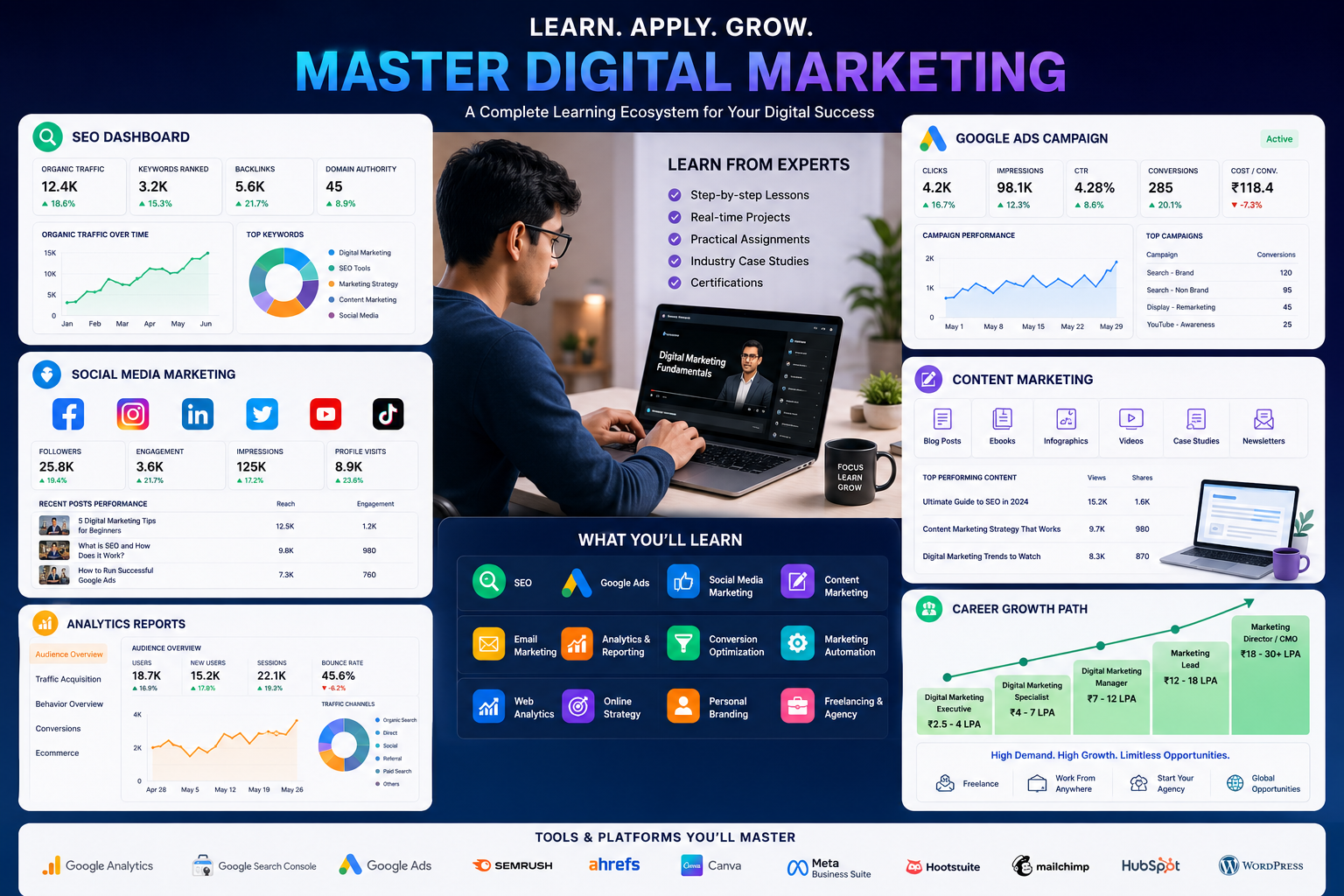
    A comprehensive digital marketing course covers several important modules.

    Search Engine Optimization (SEO)

    SEO helps websites rank higher on search engines like Google.

    Students learn:

    • Keyword research
    • On-page SEO
    • Off-page SEO
    • Technical SEO
    • Local SEO
    • SEO audits

    Moreover, SEO remains one of the most valuable digital marketing skills.

    Social Media Marketing

    Social media platforms have become powerful marketing channels.

    Students learn how to market brands through:

    • Facebook
    • Instagram
    • LinkedIn
    • YouTube
    • X (Twitter)

    Additionally, they learn audience engagement strategies and content planning.

    Google Ads

    Google Ads helps businesses generate traffic instantly.

    Students learn:

    • Search advertising
    • Display advertising
    • Remarketing campaigns
    • Performance tracking
    • Campaign optimization

    As a result, they understand how paid advertising generates business growth.

    Content Marketing

    Content remains one of the most important aspects of digital marketing.

    Students learn how to create:

    • Blog posts
    • Website content
    • Landing pages
    • Marketing copy
    • Content strategies

    Good content helps businesses build authority and trust.

    Email Marketing

    Email marketing continues delivering strong returns on investment.

    Students learn:

    • Email campaign creation
    • Audience segmentation
    • Automation workflows
    • Performance tracking

    Therefore, they can nurture leads more effectively.

    Analytics and Reporting

    Digital marketing relies heavily on data.

    Students learn how to analyze:

    • Website traffic
    • User behavior
    • Conversion rates
    • Campaign performance

    Consequently, they can make informed marketing decisions.

    Importance of SEO in a Digital Marketing Course

    Search engines remain one of the largest sources of online traffic.

    Therefore, SEO plays a critical role in digital marketing success.

    SEO helps businesses:

    • Increase website visibility
    • Generate organic traffic
    • Improve user experience
    • Build online authority

    Additionally, SEO offers long-term benefits compared to many paid marketing strategies.

    As a result, every digital marketing professional should understand SEO fundamentals.

    Role of Content Marketing in Digital Marketing

    Content marketing supports almost every digital marketing activity.

    High-quality content helps businesses:

    • Educate customers
    • Improve search rankings
    • Increase engagement
    • Build trust

    Moreover, content marketing strengthens social media campaigns and email marketing efforts.

    Therefore, content creation skills are essential for modern digital marketers.

    Benefits of Learning Digital Marketing

    A digital marketing course provides numerous advantages.

    Career Growth

    Digital marketing professionals enjoy strong career growth opportunities.

    Because businesses continue investing in online marketing, demand remains high.

    Skill-Based Learning

    Unlike many traditional academic programs, digital marketing focuses on practical skills.

    Students learn through:

    • Live projects
    • Case studies
    • Campaign management
    • Real-world applications

    Flexible Work Opportunities

    Digital marketing supports:

    • Office jobs
    • Remote work
    • Freelancing
    • Entrepreneurship

    Therefore, professionals enjoy greater flexibility.

    Continuous Learning

    The industry constantly evolves.

    As a result, marketers continue learning new strategies, tools, and technologies throughout their careers.

    Career Opportunities After a Digital Marketing Course

    Digital marketing offers diverse career options.

    SEO Executive

    SEO executives optimize websites for search engines and improve organic visibility.

    Social Media Manager

    Social media managers create content, manage communities, and grow brand presence.

    PPC Specialist

    PPC specialists manage paid advertising campaigns across various platforms.

    Content Marketing Executive

    Content marketers develop strategies that attract and engage target audiences.

    Email Marketing Specialist

    Email marketers create campaigns that nurture leads and increase customer retention.

    Digital Marketing Manager

    Experienced professionals eventually manage complete digital marketing strategies for organizations.

    Why Businesses Need Digital Marketing Professionals

    Businesses increasingly depend on online channels to generate revenue.

    Digital marketing professionals help organizations:

    • Increase website traffic
    • Generate leads
    • Improve conversions
    • Build customer relationships
    • Enhance brand visibility

    Therefore, skilled professionals remain highly valuable.

    Future Scope of Digital Marketing

    The future of digital marketing appears extremely promising.

    Several trends continue driving industry growth:

    Artificial Intelligence

    AI tools are transforming marketing workflows.

    However, businesses still require skilled professionals to develop strategies and oversee campaigns.

    Video Marketing

    Video content continues growing across platforms.

    Therefore, marketers who understand video strategies gain additional advantages.

    Voice Search

    Voice search optimization is becoming increasingly important.

    As a result, SEO strategies continue evolving.

    Automation

    Marketing automation improves efficiency.

    However, successful implementation requires skilled marketers.

    Consequently, digital marketing professionals will remain in demand for years to come.

    Why Choose GIDM for a Digital Marketing Course?

    Choosing the right institute is as important as choosing the right course.

    At GIDM, students receive industry-focused training designed to prepare them for real-world challenges.

    Key advantages include:

    • Practical learning approach
    • Experienced trainers
    • Live projects
    • Industry-relevant curriculum
    • SEO and content marketing training
    • Google Ads exposure
    • Social media marketing expertise
    • Career guidance and support

    Moreover, students gain hands-on experience that helps build confidence and job readiness.

    Who Should Join a Digital Marketing Course?

    A digital marketing course is suitable for:

    • Students
    • Fresh graduates
    • Working professionals
    • Business owners
    • Entrepreneurs
    • Freelancers

    Regardless of background, digital marketing skills can create valuable opportunities.

    How to Choose the Right Digital Marketing Course

    Before enrolling, students should evaluate:

    • Course curriculum
    • Trainer experience
    • Practical exposure
    • Live projects
    • Placement support
    • Student reviews

    Additionally, choosing an institute that focuses on practical learning often provides better outcomes.

    Conclusion

    A digital marketing course is one of the most valuable investments for anyone looking to build a successful career in today’s digital economy.

    Businesses increasingly rely on online marketing to reach customers, generate leads, and grow revenue. Therefore, skilled digital marketers remain in high demand across industries.

    Moreover, digital marketing offers multiple career paths, freelancing opportunities, business growth potential, and long-term professional development.

    Whether you are a student, working professional, entrepreneur, or freelancer, learning digital marketing can provide practical skills that remain relevant for years to come.

    By choosing the right training program and consistently applying your knowledge, you can build a rewarding career in one of the fastest-growing industries in the world.